How do I get my salon recommended by ChatGPT?
By the Margin Media team · Updated
A salon gets recommended by ChatGPT and other AI answer engines when clear, consistent facts about it exist across the web: what it specialises in, where it is, and what clients say in reviews. These tools assemble answers from public pages, so a salon with a thin website and a bare profile gives them nothing to quote.
How do AI tools choose which salon to name?
AI tools name the salons they can find specific, matching facts about. Someone asks for a curly hair specialist near them, or a nail salon open late. The tool looks for pages that say exactly that, in plain words, and for reviews that back it up.
Nobody outside these companies knows the full recipe, and it changes. What stays true is that a vague salon is hard to recommend. A line such as 'full service salon for all your beauty needs' answers no question anyone asks.
What should a salon put on its website for AI search?
Put the answers to real client questions on your website, in full sentences. Write them the way a client would ask them at the front desk, and keep each one specific to your salon.
- Each service on its own page, with who it suits and how long it takes.
- What you specialise in: curls, blonding, extensions, fades, gel nails, lash lifts.
- Your address, neighbourhood, parking and opening hours, written as text and not inside an image.
- Each stylist's name and what they are best at.
- A short list of the questions new clients ask, each with a direct answer.
Do reviews and Google matter for AI answers?
Yes. Reviews and your Google profile are public facts about your salon, and AI tools read them along with your website. A review that says a stylist fixed a bad box-dye job says more than five stars with no words.
The same details should appear everywhere: the same name, address, phone number and services on your site, your profile and any directory that lists you. Conflicting details make a salon harder to describe with confidence.
How does Margin work on AI search for a salon?
Margin's AI search visibility work puts those facts in place: service pages that answer real questions, consistent details across the web, and a complete Google profile. It sits beside the Google ranking work and, where a salon needs one, a rebuilt website.
No one can promise that an AI tool will name your salon, and Margin doesn't. What is in your control is whether the facts are there to be found. On the free audit, Found is the first of five things scored: how a new client would come across your salon today.
What Margin sets up for this.
- AI search visibility
- Google profile and local ranking
- A website built to turn a visitor into a call
What a business needs is decided on its audit. It is a one-time setup fee and a monthly fee, with exact numbers on the audit.
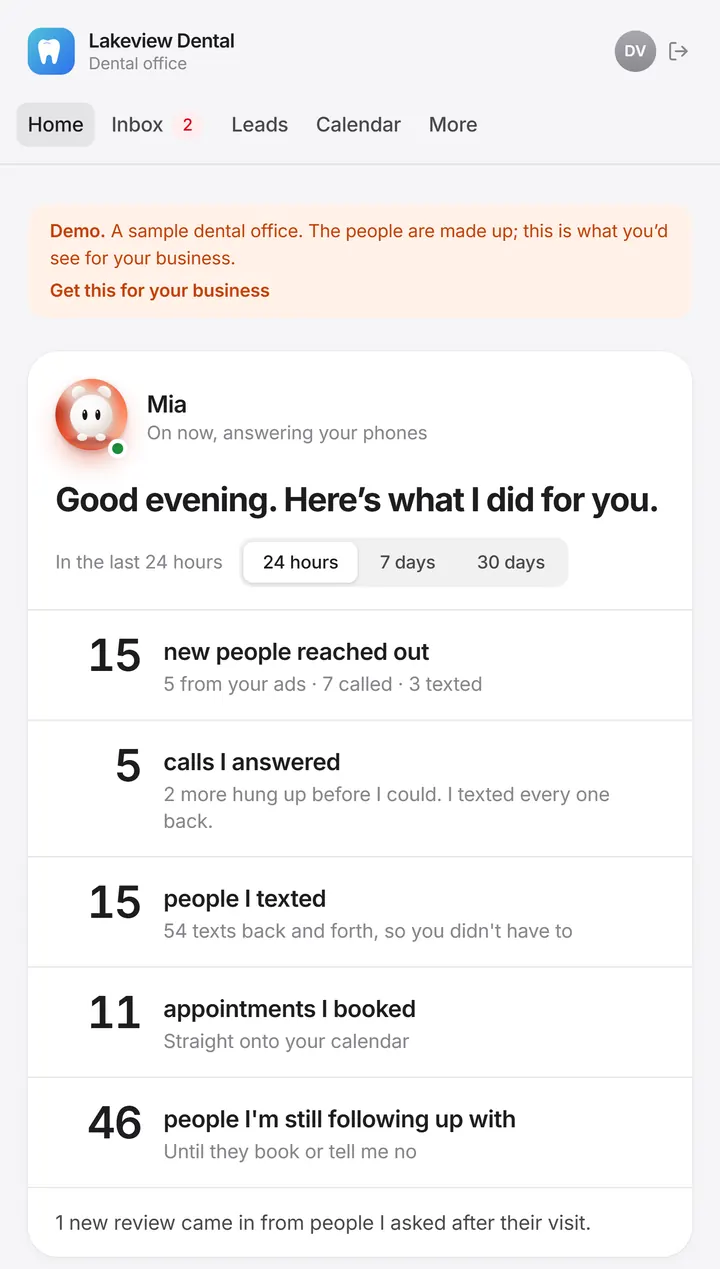
How Margin works for salonsSee the portal with a sample business
Related questions
Is AI search replacing Google for finding a salon?
Not replacing, adding. People still search Google Maps for a salon near them, and some now ask an AI tool the same question in a full sentence. The work overlaps: a complete profile, real reviews and a clear website help a salon in both.
Does a salon need a blog to show up in AI answers?
No. A salon needs clear pages about its services, its specialities and its location more than it needs a blog. If you do write, answer one real client question per page, such as how long a balayage appointment takes at your salon.
How do I check what ChatGPT says about my salon?
Ask it the way a client would: the best salon for your speciality in your neighbourhood, then your salon by name. Note what it gets wrong or leaves out.