What is speed to lead and why does it matter?
By the Margin Media team · Updated
Speed to lead is the time between a person contacting a service business and the business replying. It matters because someone who needs a plumber, a dentist or a lawyer usually contacts more than one, and tends to go with whoever answers first. A lead answered in a minute is a conversation. The same lead answered tomorrow is a cold call.
Why does the first reply tend to win?
The first reply tends to win because the person is still looking. They have a problem, the phone is in their hand and they are working down a list. Whoever picks up ends the search. Whoever calls back two hours later is interrupting someone who has already booked elsewhere.
This is truest for urgent work: no heat, a leak, a toothache, an arrest. It still holds for planned work, where the first helpful reply sets the standard everyone else is judged against.
Where does the time go?
The time goes in the gaps between people. Nobody decides to answer slowly. A web form lands in an inbox one person checks twice a day. A missed call sits in voicemail until the afternoon. An ad lead arrives on Saturday and waits for Monday.
- Calls at lunch, after closing and on weekends.
- Web forms that go to a shared inbox.
- Ad leads that arrive outside office hours.
- Voicemails nobody owns.
How do you measure your own speed to lead?
You measure it by acting like a customer. Fill in your own web form in the evening and note when someone replies. Call your own business at lunch and count the rings. The answer is often worse than the owner expects, and it costs nothing to find out.
How does Margin shorten it?
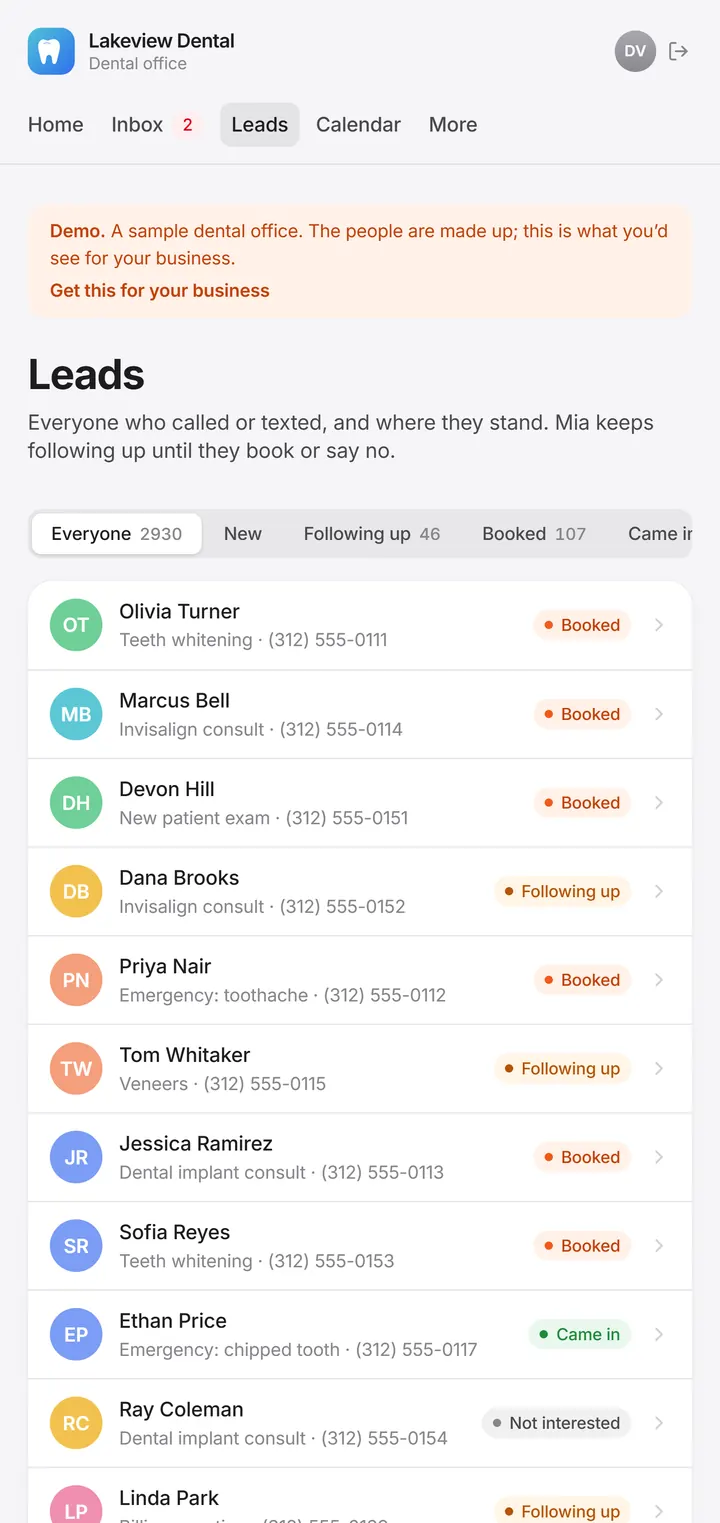
Margin shortens it by taking the wait out. Mia answers calls as they ring, day or night. A caller who hangs up is texted back within a minute, and anyone who asks and doesn't book keeps hearing from her by text until they book or say no.
Two limits: texting starts once carriers approve your number, and bookings land on the portal calendar with the office told. You can read every conversation in your portal.
What Margin sets up for this.
- Mia, the AI receptionist, on every call
- Missed calls texted back within a minute
- Follow-up until they book or say no
- Your portal: every call, text and booking
What a business needs is decided on its audit. It is a one-time setup fee and a monthly fee, with exact numbers on the audit.
Related questions
How fast should a service business respond to a new lead?
As close to straight away as it can manage. There is no magic number of minutes, but the lead is warmest while the person is still on their phone looking. Each hour after that, a service business is more likely calling someone who already booked.
Does speed to lead matter if my work isn't urgent?
Yes, though less sharply. For planned work like a remodel or a cosmetic consult, a service business that replies first and helpfully becomes the one others are compared with. Slow replies read as how the job itself will go.
Is speed to lead only about phone calls?
No. It covers every way a person reaches a service business: calls, texts, web forms and ad leads. Forms and ad leads are usually the slowest, because they land in an inbox and not on a ringing phone.