How do I stop 'is my car ready' calls tying up my auto shop's phone?
By the Margin Media team · Updated
To stop 'is my car ready' calls tying up an auto shop's phone, tell each customer at drop-off when they will next hear from you, then update them before that time. Status calls come from silence. A customer who has a promised time and gets a message by then has no reason to ring the counter.
Why do customers call to ask?
They call because nobody told them when to expect news. A car is how they get to work, and a day with no word feels long. Each of those calls takes the advisor away from the counter and ties up the line a new customer is trying to reach.
What routine cuts status calls?
The routine is a promise made at the counter and a message that keeps it. It asks the advisor for about a minute on each car in the shop.
- Tell every customer at drop-off the time they will hear from you, and write it on the ticket.
- Ask how they want updates, by call or by text, and note the number.
- Send the first update when the car has been looked at, even if the news is that parts are on order.
- Update again whenever the promised time will slip, before the customer notices.
- Send a clear message when the car is ready, with your closing time and what is owed.
- Review the day's open tickets mid-afternoon and message anyone who hasn't heard from you.
What about the status calls that still come in?
Some will still come, and they should not be answered with a guess. Whoever picks up needs either the ticket in front of them or an honest line: your advisor will get back to you by a set time. A wrong answer about a car being ready costs a wasted trip and a bad review.
What does Margin do about status calls, and what doesn't it do?
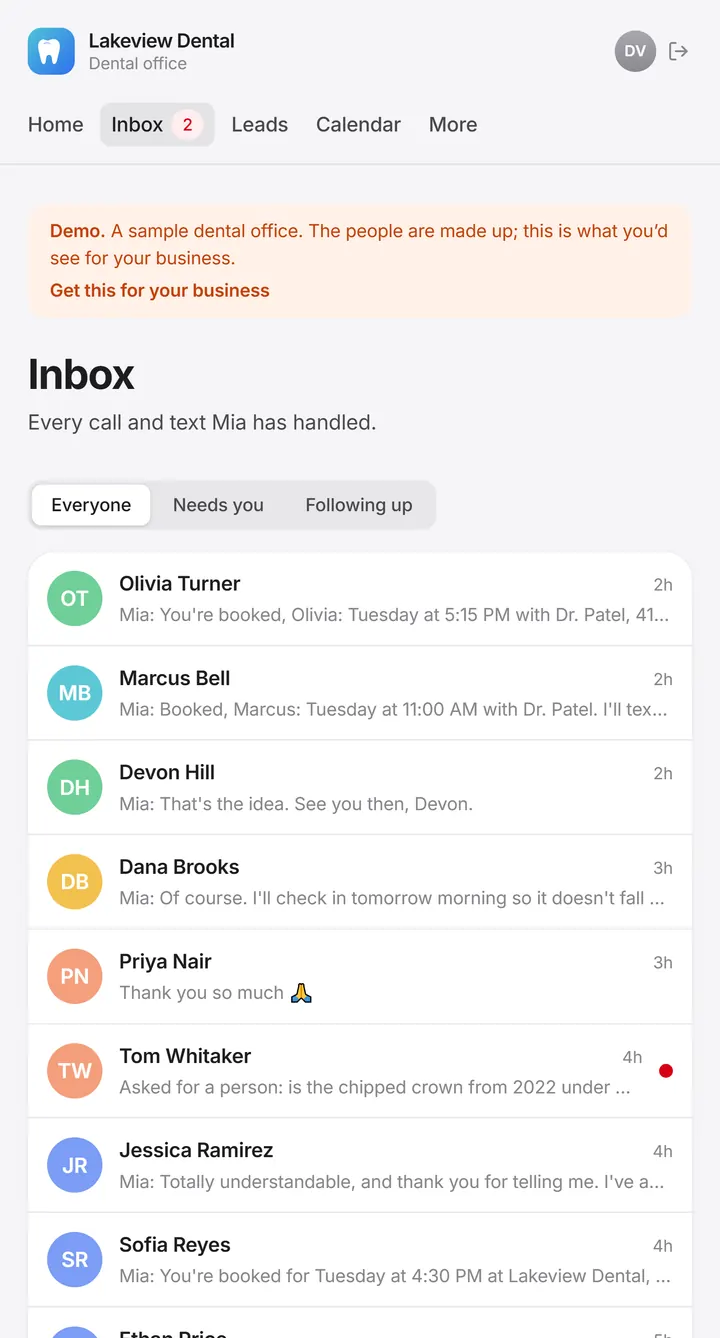
Mia, Margin's AI receptionist, keeps the line open. She answers status callers while the advisor is with someone, takes the details, and passes them to your team as a short list of people to call back, with the conversation attached. New callers get answered at the same moment instead of a busy tone.
She does not guess whether a car is ready. Whether she can see where a job stands depends on your shop software, which is looked at on your audit, and nothing is promised before that. Sending the updates in the routine above stays with your advisors.
What Margin sets up for this.
- Mia, the AI receptionist, on every call
- Your portal: every call, text and booking
- Missed calls texted back within a minute
What a business needs is decided on its audit. It is a one-time setup fee and a monthly fee, with exact numbers on the audit.
How Margin works for auto shopsSee the portal with a sample business
Related questions
Should an auto shop text customers when their car is ready?
Yes, if the customer agreed to texts at drop-off. A short text from the auto shop saying the car is ready, with the closing time, saves a phone call on both sides and gives the customer something to check later.
How often should an auto repair shop update a customer on a long job?
At every point you promised, and any time the plan changes. On a multi-day job, an auto repair shop does well to send a short daily note, even when the note only says the part has not arrived.
Who should handle status calls at an auto shop?
The advisor who wrote the ticket is the right person, because they know the job. The aim at a busy auto shop is for that advisor to send the update first, so the call never has to be made.