How do I cover the phones at a physical therapy clinic with a small front desk?
By the Margin Media team · Updated
A physical therapy clinic with a small front desk covers the phones by separating the calls only a person can handle from the ones that follow a pattern, then giving the pattern calls somewhere else to go. Scheduling, hours, directions and first-visit questions do not need the person who is also checking patients in.
Why is the phone so hard for a small desk?
The phone is hard because it interrupts work that cannot be dropped. A physical therapy front desk is checking in a patient every few minutes, booking out the rest of someone's plan of care, and waiting on hold with a physician's office for a signature.
How do I set it up, step by step?
Work through this in order. The first three steps cost nothing but an hour of attention, and they make the last three far easier to get right.
- List every reason people called last week and mark which ones needed a staff member's judgment.
- Write a one-page answer sheet for the routine questions: hours, location, parking, what to bring, what to wear.
- Block the last ten minutes of each hour for one person to return calls, so call-backs are not left to the end of the day.
- Route calls the desk cannot reach to something that answers, not to a general voicemail box.
- Make sure whoever answers can offer a real evaluation time, not only take a message.
- Review the missed and handled calls every Friday and adjust the answer sheet.
When is hiring the right answer?
Hiring is the right answer when the desk is overloaded with in-person work, not only with calls. If patients queue at check-in and paperwork is running days behind, a phone fix will not solve it. You need another person.
If the in-person work is under control and it is the ringing that breaks the day, cover the phone first. It is quicker, and it shows you how much of the load was calls.
How does Margin cover the phones for a physical therapy clinic?
Margin sets up Mia, an AI receptionist, to pick up only the calls your desk misses, or every call if you would rather. She answers the routine questions from the sheet you approve, books evaluations onto your portal calendar and tells the office. When a caller asks for a person, she tells your team and steps aside.
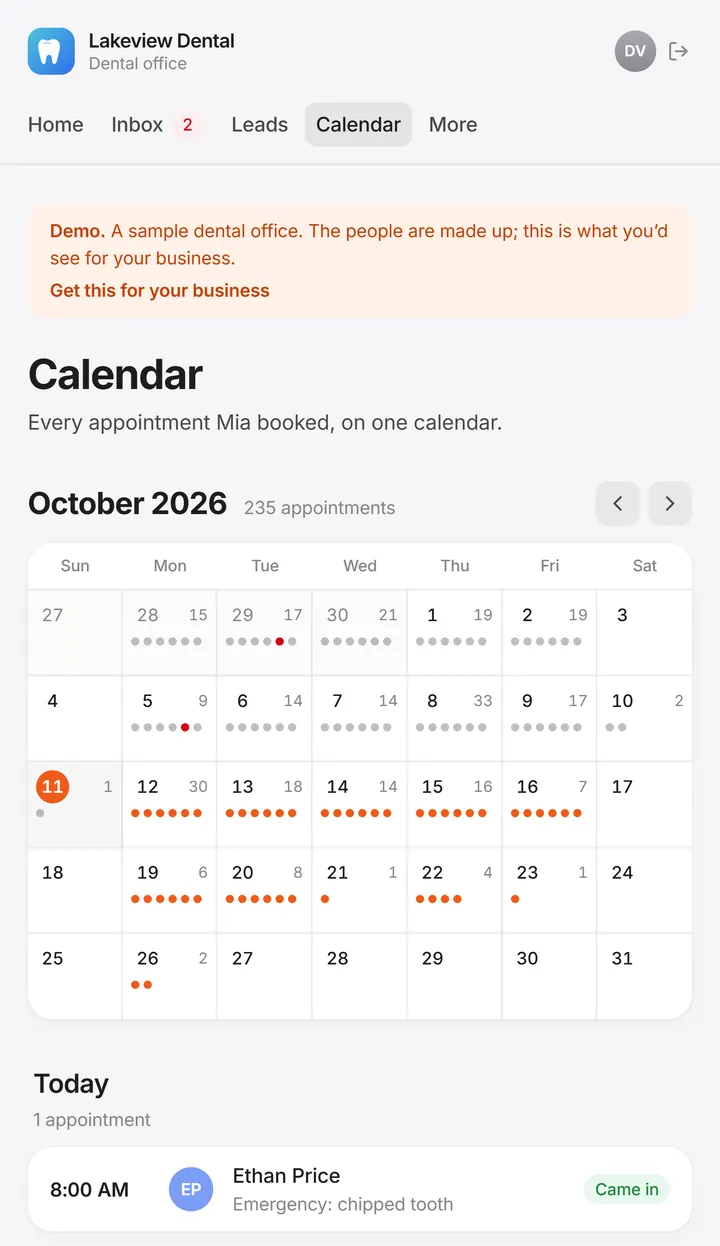
Everything she handles is in the portal: each call with its transcript and a daily report. Bookings land on the portal calendar, so your team still enters them in the schedule you already keep.
What Margin sets up for this.
- Mia, the AI receptionist, on every call
- Booking onto your calendar
- Your portal: every call, text and booking
- Missed calls texted back within a minute
What a business needs is decided on its audit. It is a one-time setup fee and a monthly fee, with exact numbers on the audit.
How Margin works for chiropractors and physical therapistsSee the portal with a sample business
Related questions
Should therapists answer the phone at a small physical therapy clinic?
No. A therapist who leaves a patient to answer the phone shortens a visit someone is paying for. In a small physical therapy clinic, calls the desk cannot reach should go to something that answers and books, not to the treatment floor.
Will an AI receptionist replace my physical therapy front desk?
No. A physical therapy clinic still needs people to greet patients, sort out paperwork and handle anything that takes judgment. An AI receptionist takes the calls the desk cannot reach, so the person at the desk can finish what they started.
What calls can't be handed off at a physical therapy clinic?
Anything that needs clinical judgment, anything about a patient's records, and anything about what a plan will or will not cover. Those stay with the staff of a physical therapy clinic. Hours, directions, first-visit questions and scheduling are the calls that follow a pattern.