AI receptionist vs a phone tree (IVR) for a service business
By the Margin Media team · Updated
For a service business, a phone tree is the right tool when the only job is routing known callers to the right department, and an AI receptionist is the right tool when a new caller needs an answer or a booking. A phone tree sorts calls. It does not answer them, and a new customer still ends up waiting for a person.
What does a phone tree actually do?
A phone tree, also called an IVR or auto attendant, plays a menu and sends the caller where they press. Press one for service, two for billing. It is good at keeping billing calls away from the dispatcher. It does nothing for the caller once they arrive: if nobody is free in that department, the call rings out or reaches a mailbox.
An AI receptionist skips the menu. The caller says what they need in their own words, gets an answer to the usual questions, and can be booked. Where the call needs a person, it is passed to your team with the details.
How do they compare for a new caller?
A phone tree and an AI receptionist are compared below from the side of a new customer who has never called you before and has two other businesses open in another tab.
| Phone tree (IVR) | AI receptionist | |
|---|---|---|
| First thing heard | A menu of numbers | A greeting and a question |
| How the caller explains | By pressing keys | By talking normally |
| If no one is free | Rings out or voicemail | Still answered |
| Booking a visit | Needs a person | Done on the call |
| Best at | Routing inside a larger office | Answering new customers |
When is a phone tree the better choice?
A phone tree is the better choice in a larger office with real departments and staff sitting in each one: a multi-doctor practice, a firm with separate intake and billing teams. If callers mostly know who they want, and someone always picks up at the other end, a menu is quick and familiar.
How does Margin set this up for a service business?
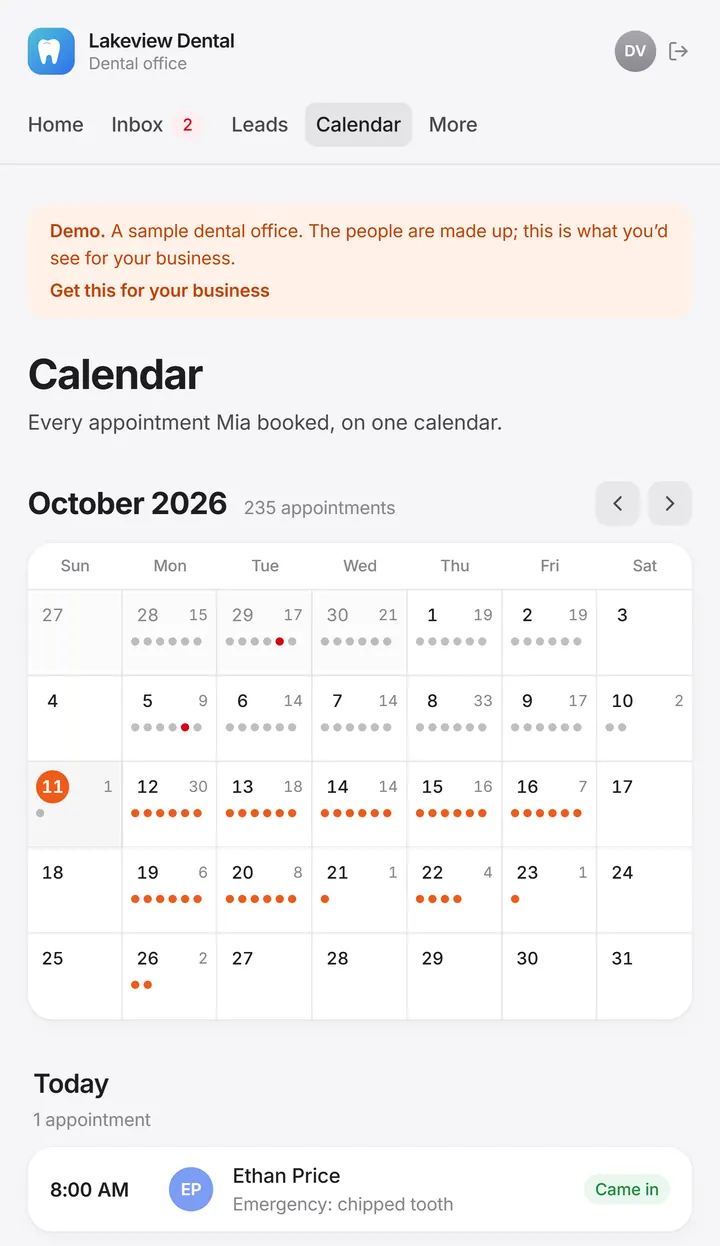
Margin sets up Mia to answer in place of the menu, or behind it on the lines nobody is picking up. She answers questions and takes messages without putting anyone on hold, and passes a caller who wants a person to your office. Bookings land on the portal calendar and your office is told. Which calls she takes is decided on your audit.
What Margin sets up for this.
- Mia, the AI receptionist, on every call
- Booking onto your calendar
- Your portal: every call, text and booking
What a business needs is decided on its audit. It is a one-time setup fee and a monthly fee, with exact numbers on the audit.
Related questions
Do customers dislike phone trees?
Call your own menu as a new customer would and time how long it takes to reach help. If you would have hung up, so would they. A service business with a short menu and fast pickup has less to worry about.
Can a service business use a phone tree and an AI receptionist together?
Yes. A service business can keep a short menu for existing customers and have an AI receptionist answer the new-customer option and any line that goes unanswered. The menu routes, and the AI answers.
Is an AI receptionist just a smarter phone tree?
No. A phone tree moves a call to another line. An AI receptionist for a service business holds a conversation, answers common questions, takes messages and books a time, which is the work a person would otherwise do.