How do I get more consultations for my cosmetic surgery practice?
By the Margin Media team · Updated
A cosmetic surgery practice gets more consultations by fixing the step where enquiries are already being lost, before paying for more of them. Check four things in order: whether patients can find you, whether every call and form is answered quickly, whether undecided patients are followed up, and whether booked consultations actually show.
Where do cosmetic surgery consultations go missing?
They go missing after the enquiry more often than before it. A patient who has thought about a procedure for months finally calls on a lunch break or fills in a form at night. If the line rings out or the form sits until Monday, they contact the next surgeon on their list.
What should you fix first?
Fix answering and follow-up before you spend more on being found. More enquiries poured into a practice that misses calls only raises what each consultation costs you. Work through these steps in order, and write your own numbers next to each one.
- Call your own practice at lunch, after five and on Saturday morning, and note what a new patient hears.
- Count last month's enquiries from every source, then count how many became booked consultations.
- List every enquiry that did not book and check whether anyone contacted them a second time.
- Count the booked consultations that did not show, and whether each was offered a new time.
- Search Google for your main procedures plus your area and see where your practice appears.
- Spend on ads only after the first four steps stop losing patients you already paid to reach.
Which ways of getting found suit elective procedures?
Three channels suit them: search ads for people already looking for a named procedure, your Google profile and reviews for people comparing surgeons nearby, and Facebook and Instagram ads for people still thinking about it. The third group takes the longest to book, so it needs the most follow-up.
How does Margin do this for a cosmetic surgery practice?
Margin starts with a free 30-minute audit on Google Meet. Before it, we phone your practice the way a new patient would. Then we score five steps, Found, Answered, Booked, Showed and Came back, and cost the biggest leak from your own numbers. The written plan is yours either way.
If you go ahead, we can run the ads in an account you own, and Mia, our AI receptionist, answers the calls, books consultations onto the portal calendar and tells your office. She follows up by text with patients who did not book. Texting starts once phone carriers approve your number, which takes days to a couple of weeks.
What Margin sets up for this.
- Ads on Facebook and Instagram, in an account you own
- Google profile and local ranking
- Mia, the AI receptionist, on every call
- Booking onto your calendar
- Follow-up until they book or say no
What a business needs is decided on its audit. It is a one-time setup fee and a monthly fee, with exact numbers on the audit.
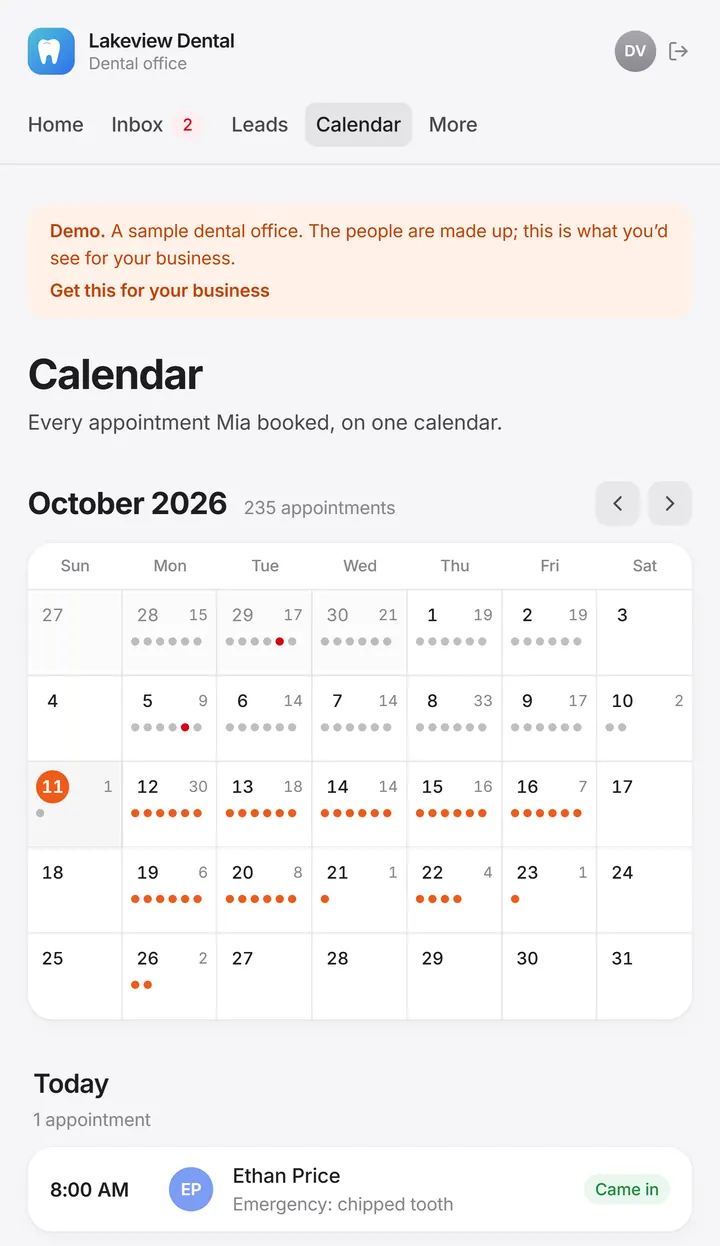
How Margin works for cosmetic and elective medical practicesSee the portal with a sample businessThe Surgery Accelerator, for plastic surgeons
Related questions
How long does a cosmetic surgery patient take to book a consultation?
There is no single answer: some book the day they enquire and others think for months. What a cosmetic surgery practice controls is whether it stays in touch during that time. Compare enquiry dates with booking dates in your own records to see your pattern.
Should a cosmetic surgery practice buy more ads or fix its phones first?
Fix the phones first. Every missed call and unanswered form is an enquiry a cosmetic surgery practice already paid to get. Once calls are answered and undecided patients are followed up, the same ad budget has fewer places to leak.
What does it cost to have Margin do this for a cosmetic surgery practice?
It is a one-time setup fee and a monthly fee, and the exact numbers are given on the audit once it is clear what your cosmetic surgery practice needs. If you advertise, the ad budget is your money, paid straight to the platform.