Google Ads vs Facebook ads for a dental practice
By the Margin Media team · Updated
For a dental practice, Google Ads reach people already searching for a dentist, so they suit urgent needs and new-patient visits. Facebook and Instagram ads reach people who weren't looking, so they suit treatments people think about for a while, such as implants, clear aligners and whitening. Start with Google, and add the other once enquiries are being followed up.
What is the real difference?
The difference is intent. On Google, someone has typed what they want, and your ad answers it. On Facebook and Instagram, nobody asked. Your ad interrupts a feed, so it has to earn attention with a picture or a short video, and the person may take weeks to act. Both can work for a dental practice. They do different jobs.
How do they compare side by side?
Here is how the two differ on the points that matter to a practice owner deciding where the first ad budget goes. Neither is better in every case.
| Google Ads | Facebook and Instagram ads | |
|---|---|---|
| Who sees it | People searching for a dentist or a treatment | People chosen by area and interests, not searching |
| Best suited to | Toothaches, new-patient visits, a dentist nearby | Implants, clear aligners, whitening, cosmetic work |
| How fast people act | Often the same day | Days or weeks, and they need following up |
| What the ad needs | Clear words and a page that leads to a call | A photo or video that stops the scroll |
| Main risk | Paying for the wrong searches | Enquiries that go quiet if nobody follows up |
When is Facebook the better choice?
Facebook and Instagram are the better choice when the treatment is one people want but nobody searches for in a hurry, and when the practice is able to follow up. A person who taps an aligner ad on a Tuesday night is not ready to book. If nobody texts or calls them back, more than once, that enquiry is gone. Without follow-up, stay on Google.
How does Margin choose for dental offices?
Margin starts dental offices on Google, then adds Facebook and Instagram, for the treatments you want more of. The ads run in an account you own and the budget goes straight to the platform. Each campaign gets its own booking page. Ads go live within 30 days of kickoff.
Whoever enquires and doesn't book is followed up by text until they book or say no, which is what makes the slower Facebook enquiries worth having. Texting starts once phone carriers approve your office's number, usually a few days to a couple of weeks.
What Margin sets up for this.
- Ads on Facebook and Instagram, in an account you own
- Follow-up until they book or say no
- Booking onto your calendar
What a business needs is decided on its audit. It is a one-time setup fee and a monthly fee, with exact numbers on the audit.
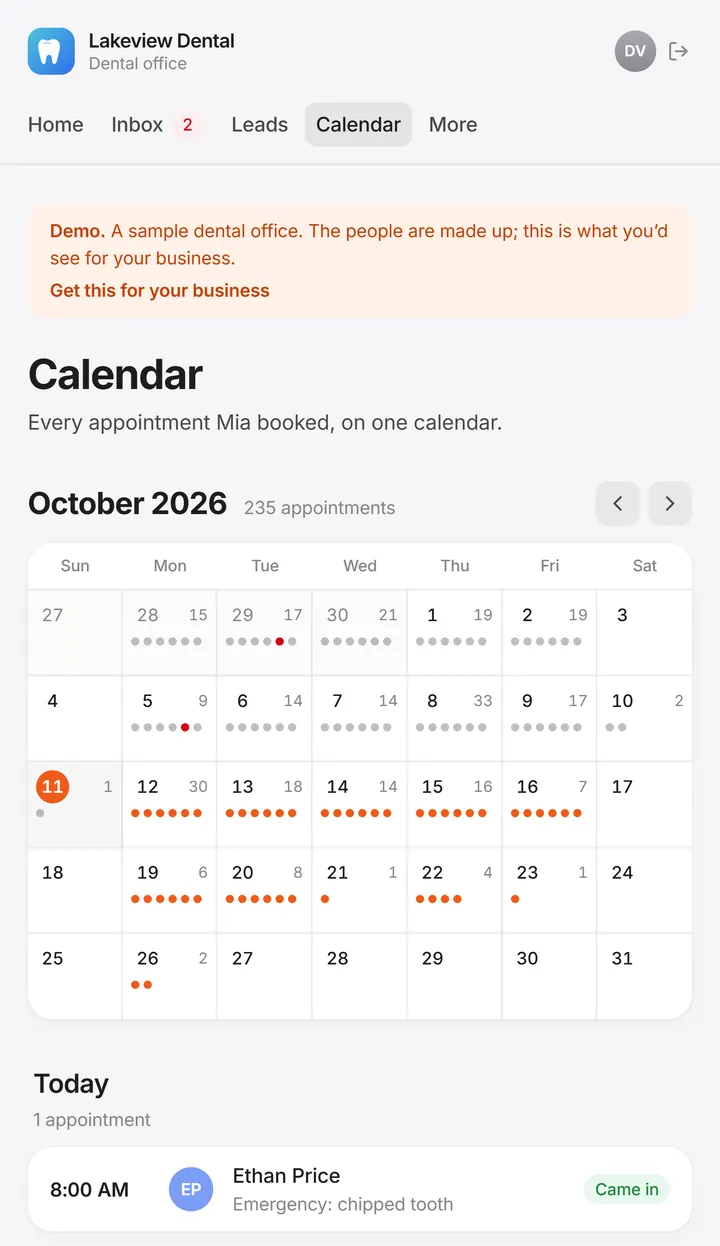
How Margin works for dental officesSee the portal with a sample businessThe Implant Accelerator, for implant practices
Related questions
Should a new dental practice start with Google or Facebook ads?
A new dental practice is better starting with Google, because it reaches people already looking for a dentist nearby. Add Facebook and Instagram later for treatments patients plan ahead for, once someone is answering every call and following up every enquiry.
Do Facebook ads work for dental implants?
They can, because implants are something people consider for a long time before acting. For a dental practice the ad is only the start: the enquiry needs a quick reply and patient follow-up over days or weeks, or it goes nowhere.
Can a dental practice run Google and Facebook ads at the same time?
Yes. A dental practice can run both, with Google catching people searching today and Facebook reaching people for planned treatments. Run them only when the phone and the follow-up can keep up, and judge each by booked appointments, not clicks.