How do I get electrical leads without pay-per-lead sites?
By the Margin Media team · Updated
An electrician gets leads without pay-per-lead sites by owning the places customers already look: a complete Google Business Profile, steady recent reviews, a website that makes calling easy, and ads in an account the company owns. Then every call has to be answered, because a lead you produced yourself and missed is wasted just the same.
Why do shared leads feel so expensive?
Shared leads feel expensive because the same homeowner is often sold to several electricians at once, so you pay for the chance to race. Whoever reaches the customer first tends to set the visit, and the others paid for a phone number. You are also renting attention: stop paying and the calls stop the same day.
What are the steps to build your own leads?
The steps below run from free to paid. Do them in order, because ads sent to a thin profile and an unanswered phone waste the budget.
- Claim your Google Business Profile and list every service you want, from panel upgrades to EV charger installs.
- Ask every finished customer for a Google review while the job is still fresh in their mind.
- Put your phone number and a short request form at the top of every page of your website.
- Run search ads for the work you want more of, in an ad account your company owns.
- Send each ad to its own booking page, not to your general homepage.
- Answer every call and form within minutes, including evenings and weekends, and follow up the ones that do not book.
- Record where each new customer came from, so you know what to keep paying for.
When are pay-per-lead sites still worth using?
Pay-per-lead sites still make sense when you are new, have no reviews yet and need work this week. They can fill a thin calendar while the slower things build. The trouble starts when they are your only source, because you never build anything you own. Treat them as a bridge, and judge them by booked jobs, not by leads bought.
How does Margin set this up for an electrician?
Margin builds the owned side for an electrical company: the Google profile and local ranking work, ads on Facebook and Instagram in an account you own, and a booking page for each campaign. The ad budget is your money, paid straight to the platform.
Mia, the AI receptionist, then answers the calls those ads produce, books the service call or estimate onto your portal calendar and tells your office. It starts with a free 30-minute audit, and the written plan is yours to keep either way.
What Margin sets up for this.
- Ads on Facebook and Instagram, in an account you own
- Google profile and local ranking
- A website built to turn a visitor into a call
- Mia, the AI receptionist, on every call
- Booking onto your calendar
What a business needs is decided on its audit. It is a one-time setup fee and a monthly fee, with exact numbers on the audit.
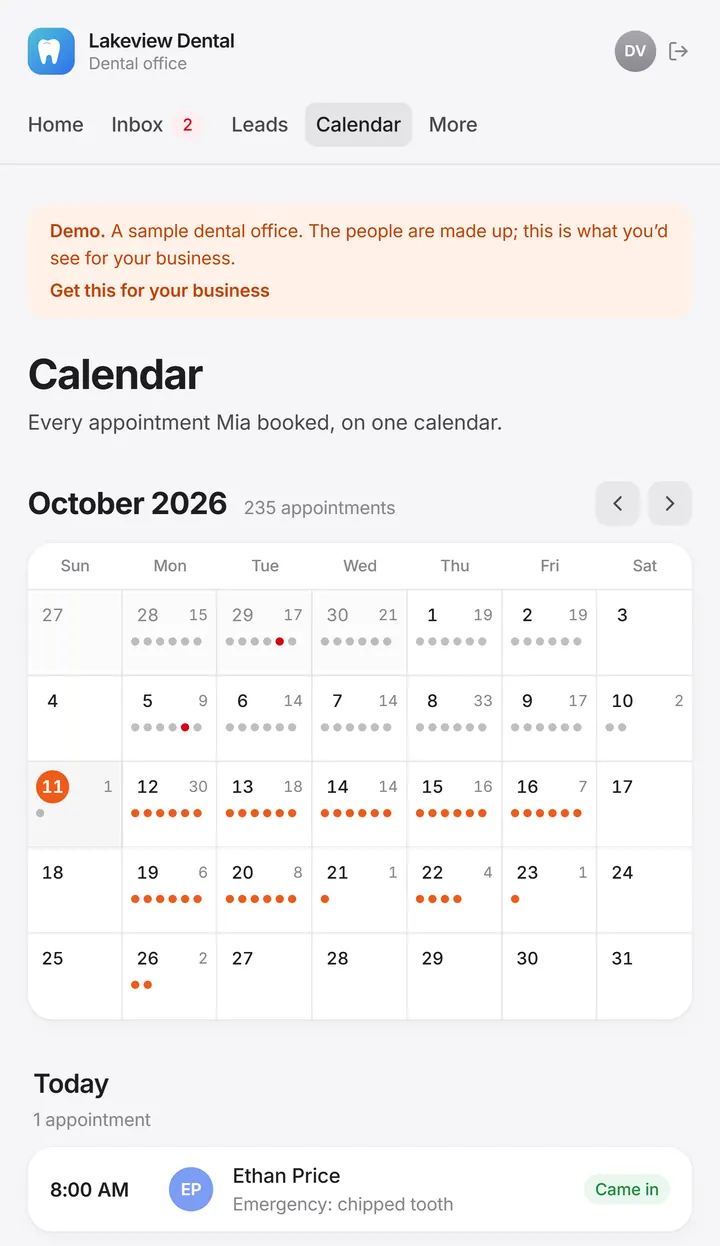
How Margin works for electriciansSee the portal with a sample business
Related questions
Are pay-per-lead sites a waste of money for electricians?
Not always. For an electrician with no reviews and an empty week they can bring work quickly. They become a poor deal when several contractors get the same lead and nobody at your company answers it first. Judge them by booked jobs.
How long does it take an electrician to build their own leads?
Ads can bring calls soon after they go live, while Google ranking and reviews build more slowly. An electrician who starts both at once has paid calls covering the gap while the unpaid ones grow. Nobody can honestly promise a date for ranking.
What is the first thing an electrician should fix to get their own leads?
The Google Business Profile. It is free, it is where nearby customers look first, and an electrician can complete it in an evening. Reviews and a clear website come next, and ads after that.