Why doesn't my plumbing website turn visitors into calls?
By the Margin Media team · Updated
A plumbing website fails to turn visitors into calls when it makes a hurried person work. The phone number is not tappable at the top, the page loads slowly on a phone, the services and towns are vague, or the only way in is a form nobody answers until tomorrow. A plumbing site has one job: get the call.
What does a visitor to a plumbing website want?
They want to know three things in a few seconds: do you fix my problem, do you come to my street, and can I reach you now. Someone with a blocked toilet is standing in the bathroom holding a phone. They are not reading about your values. If the answer to any of the three is unclear, they leave.
What are the usual faults?
The usual faults are small and easy to see once you look at your own site on your own phone, with one hand, as a customer would.
- The phone number is an image or sits in the footer, so it cannot be tapped from the top.
- The first screen is a large photo with a slogan, and the services are two scrolls down.
- No towns or areas are named, so the visitor cannot tell if you come to them.
- The contact form sends to an inbox that is checked at the end of the day.
- No reviews or photos of real jobs, so nothing says other people trusted you.
What should the first screen show?
It should show your name, the jobs you do, the area you cover, a tap-to-call button and proof you are real, such as your review score. Emergency hours belong there too if you take night calls. Everything else can sit below. Then test it: hand your phone to someone and time how long they take to call you.
How does Margin rebuild a plumbing website?
Margin builds or rebuilds the site around the call: the jobs, the area and the button at the top, with a page for each main service. Where ads run, each campaign gets its own booking page. When the visitor does call, Mia answers day or night, and the booked job lands on your portal calendar with your office told.
A new site does not bring visitors by itself. It makes more of the ones you already get from Google, ads and referrals, and whether it is worth doing first is something the free audit works out.
What Margin sets up for this.
- A website built to turn a visitor into a call
- Mia, the AI receptionist, on every call
- Booking onto your calendar
- Google profile and local ranking
What a business needs is decided on its audit. It is a one-time setup fee and a monthly fee, with exact numbers on the audit.
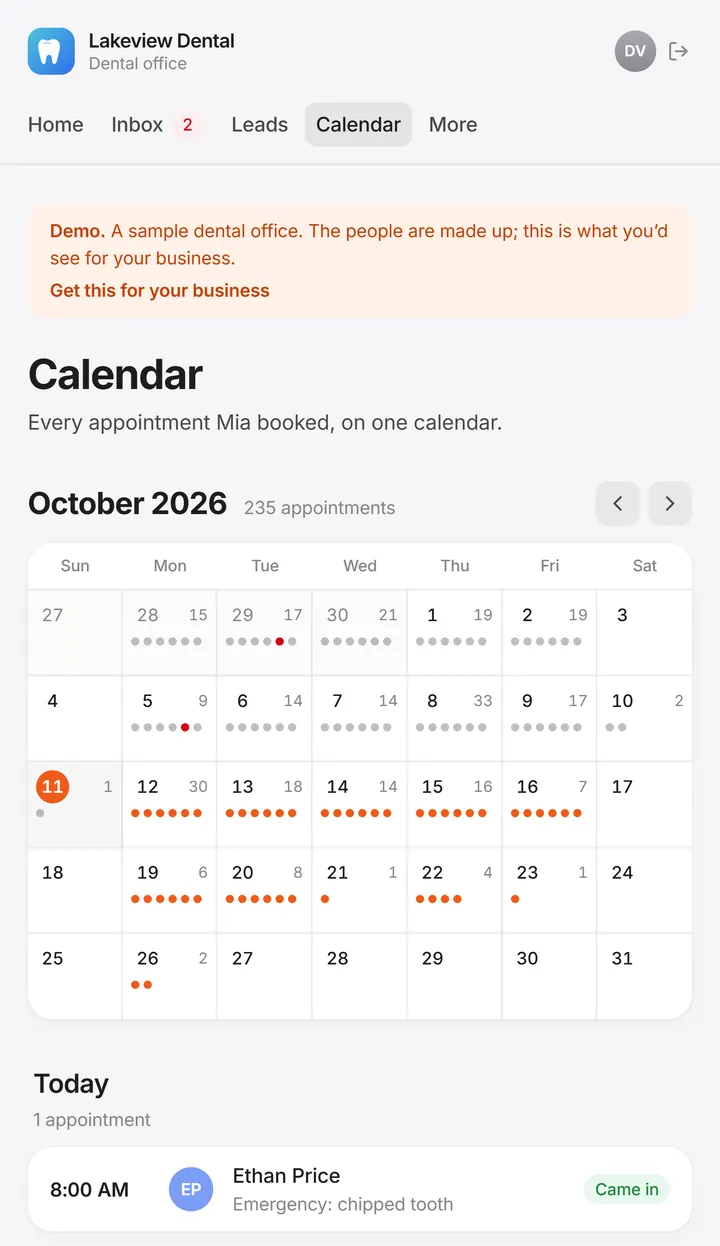
How Margin works for plumbersSee the portal with a sample business
Related questions
Does a plumber really need a website if the Google profile gets calls?
A Google profile can carry a small plumbing company a long way. A website helps when customers want to check you before calling, when you run ads that need a page to land on, and when you want to be found for specific jobs like repipes.
Should a plumbing website have a contact form or just a phone number?
Both, with the phone number first. Urgent plumbing customers call. People planning a water heater or a bathroom job may prefer a form at night. A form only helps if someone replies within minutes, not the next afternoon.
How can a plumber tell if the website is losing customers?
Compare visits with calls. If your plumbing website gets steady visitors and few calls, open it on a phone and try to call yourself in one tap. Then ask whether the calls it did send were answered.