Google ads vs Instagram ads for a hair salon
By the Margin Media team · Updated
For a hair salon, Google ads reach people who are searching for a salon right now, while Instagram ads show your work to people nearby who were not looking. Google suits filling chairs soon. Instagram suits visual services such as colour and extensions. Neither pays if the enquiries they produce go unanswered.
What is the difference for a salon?
The difference is intent. A person who types 'hair salon near me' or 'balayage' plus a neighbourhood wants an appointment. A person scrolling Instagram sees a colour transformation and may save it for later. Both can become clients, on different clocks.
| Google ads | Instagram ads | |
|---|---|---|
| Who sees it | People searching for a salon or a service | People nearby, chosen by area and interests |
| What it shows | A few lines of text and your details | Photos and video of your stylists' work |
| Best for | Filling open chairs soon | Colour, extensions, lashes and nails: work that shows |
| When they book | Often close to the moment they search | Later, often after a message or a follow-up |
| Main weakness | Little room to show your work | Enquiries from people not ready to book |
When is neither worth running?
Neither is worth running when your salon is already full, or when you can't answer what the ads bring in. An ad that sends a new client to a phone nobody picks up has bought a missed call. Fix the answering before you buy more ringing.
Ads suit some situations better than others: a new stylist with an empty book, a second location, a new service. For a full salon with a waiting list, reviews and rebooking do more than ads.
How do you tell whether a salon ad paid for itself?
Count bookings, not clicks or likes. For each campaign you want to know how many people enquired, how many booked, how many showed up, and what a new client is worth to you over a year of visits. Divide what you spent by the clients who showed up.
How does Margin run ads for a salon?
Margin builds and runs the ads, on Facebook and Instagram, with a booking page for each campaign. The ad account belongs to the salon, and the ad budget is the salon's money, paid straight to the platform.
The same team sets up the answering. Mia picks up the calls, books an open time and follows up by text with enquiries that went quiet. Texting waits on carrier approval of your salon's number. Whether ads are right for your salon at all is settled on the free audit, and sometimes the honest answer is not yet.
What Margin sets up for this.
- Ads on Facebook and Instagram, in an account you own
- Mia, the AI receptionist, on every call
- Booking onto your calendar
- Follow-up until they book or say no
- A monthly report and strategy call
What a business needs is decided on its audit. It is a one-time setup fee and a monthly fee, with exact numbers on the audit.
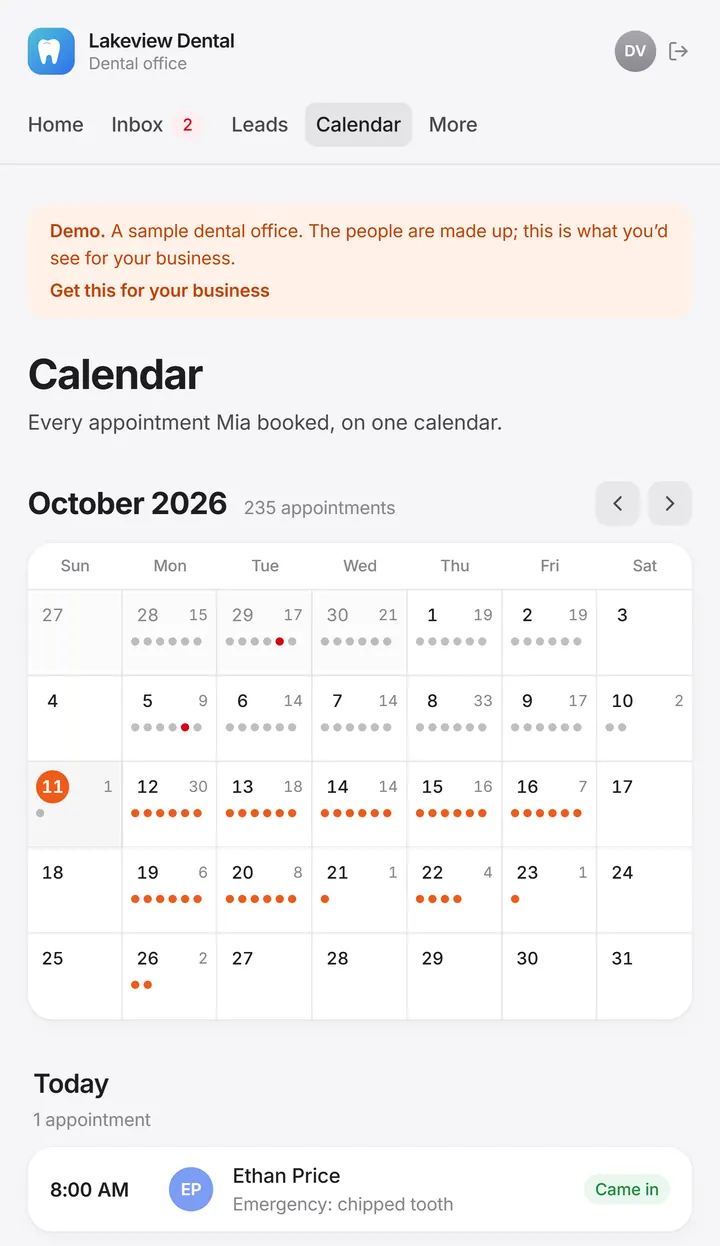
How Margin works for salonsSee the portal with a sample business
Related questions
Should a salon boost Instagram posts instead of running ads?
Boosting a post is the simplest kind of Instagram ad. It gets a salon's work seen, but it is built for likes and views. If the goal is bookings, an ad that sends people to a booking page and counts who booked tells you more.
How much should a hair salon spend on ads?
There is no right figure for every hair salon. Work backward from your own numbers: how many open appointments you need to fill, and what a new client is worth across a year of visits. Begin small enough that you can answer every enquiry it brings.
Do Google ads work for a barbershop?
They can, when the barbershop has open chairs and answers its phone. Barbershop searches are often for right now, so the ad has to lead to a call that gets picked up or a time that can be booked on the spot.