AI receptionist vs a virtual (remote human) receptionist
By the Margin Media team · Updated
For a service business, a virtual receptionist, meaning a real person answering remotely, is the better choice when callers need warmth and judgement on most calls. An AI receptionist is the better choice when the need is cover at every hour and no caller ever waiting. A remote person is still one person, with shifts, queues and other clients.
What is a virtual receptionist?
A virtual receptionist is a human who answers your line from somewhere else, either dedicated to you or shared across several businesses. They sound like part of your office, can follow fairly detailed instructions, and can use judgement when a call goes off script.
The limits are the limits of any person. They work set hours unless you pay for more, they can take one call at a time, and a shared receptionist knows your business only as well as the notes in front of them.
How do they compare?
Here is the comparison on the points owners ask about. Both can answer in your business's name and both can pass a call to your team. The differences are in hours, queues and the human touch.
| Virtual receptionist | AI receptionist | |
|---|---|---|
| Who answers | A real person, remotely | An AI |
| Warmth and judgement | Strong | Polite, but hands off the hard calls |
| Nights and weekends | If you pay for the cover | Included |
| Several calls at once | A queue or overflow | All answered |
| Consistency | Varies with who is on shift | The same every call |
When is a virtual receptionist the better choice?
A virtual receptionist is the better choice when the call itself is the service: a law firm where a new client is frightened, a home care agency, a practice whose patients are elderly and uneasy with technology. It also suits an owner who simply wants a person, which is a fair preference.
How does Margin compare for a service business?
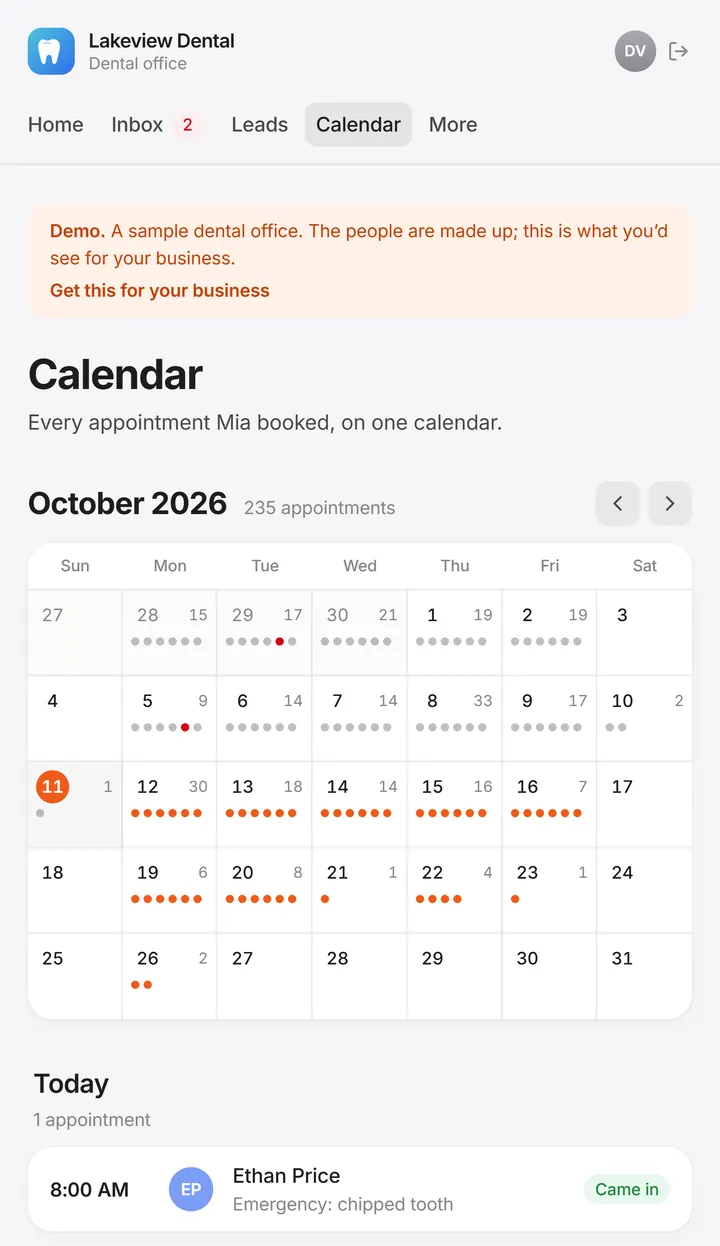
Margin's Mia is an AI and says so when asked. She answers day, night and weekends, books an open time and takes messages. When a caller asks for a person, she tells your office and steps aside, so she can sit beside a virtual receptionist as cover for the hours and overflow that person cannot take. Bookings land on the portal calendar and your office is told.
What Margin sets up for this.
- Mia, the AI receptionist, on every call
- Booking onto your calendar
- Your portal: every call, text and booking
What a business needs is decided on its audit. It is a one-time setup fee and a monthly fee, with exact numbers on the audit.
Related questions
Is a virtual receptionist the same as an answering service?
Not quite. An answering service usually takes messages for many businesses from a short script. A virtual receptionist for a service business is closer to a remote member of staff who can do more than take a message.
Can an AI receptionist and a virtual receptionist share a line?
Yes. A service business can send calls to the person first and to the AI when that person is busy or off shift. The person gets the calls that need judgement and nothing rings out.
Which one sounds better to callers?
A person sounds like a person. An AI receptionist sounds natural enough that the best way for a service business owner to judge is to phone one and hold a normal conversation.