Marketing agency vs in-house marketing for a cosmetic practice
By the Margin Media team · Updated
For a cosmetic practice, in-house marketing gives you someone who knows your surgeons, your patients and your voice, while a marketing agency gives you specialists in ads, search and websites without a full-time wage. A small practice seldom has the workload for a specialist in each area, which is the usual case for an agency.
What does each do well?
An in-house marketer does well at everything close to the practice: photos, patient stories with consent, events, social posts and getting an answer from the surgeon the same day. An agency does well at the technical channels, where one person rarely has depth in search ads, social ads, websites and Google ranking all at once.
| In-house marketer | Marketing agency | |
|---|---|---|
| Knowledge of your practice | Deep, and grows over time | Only what you tell them |
| Range of skills | One person's skills | A team of specialists |
| Cost shape | A wage, all year | A fee, plus your ad budget |
| Speed on day-to-day content | Fast | Slower, by request |
| Who owns the ad accounts | The practice | Ask: it should be the practice |
| If they leave | Knowledge leaves with them | You change agency; check you keep the accounts |
When is in-house the better choice?
In-house is the better choice when your marketing is mostly content and relationships, when you have enough work to fill a week every week, and when you can manage and train the person. A practice with several surgeons and locations may well justify a team. An employee also sits near the phones and sees what happens to enquiries.
What should you ask an agency?
Ask what they are measured on. An agency that reports clicks and leads is telling you about its own work, not your calendar. Ask who owns the ad account and the website, what happens to an enquiry after it arrives, how long the contract runs, and how well they know the ad platforms' rules for health advertising.
How does Margin differ from a typical agency for a cosmetic practice?
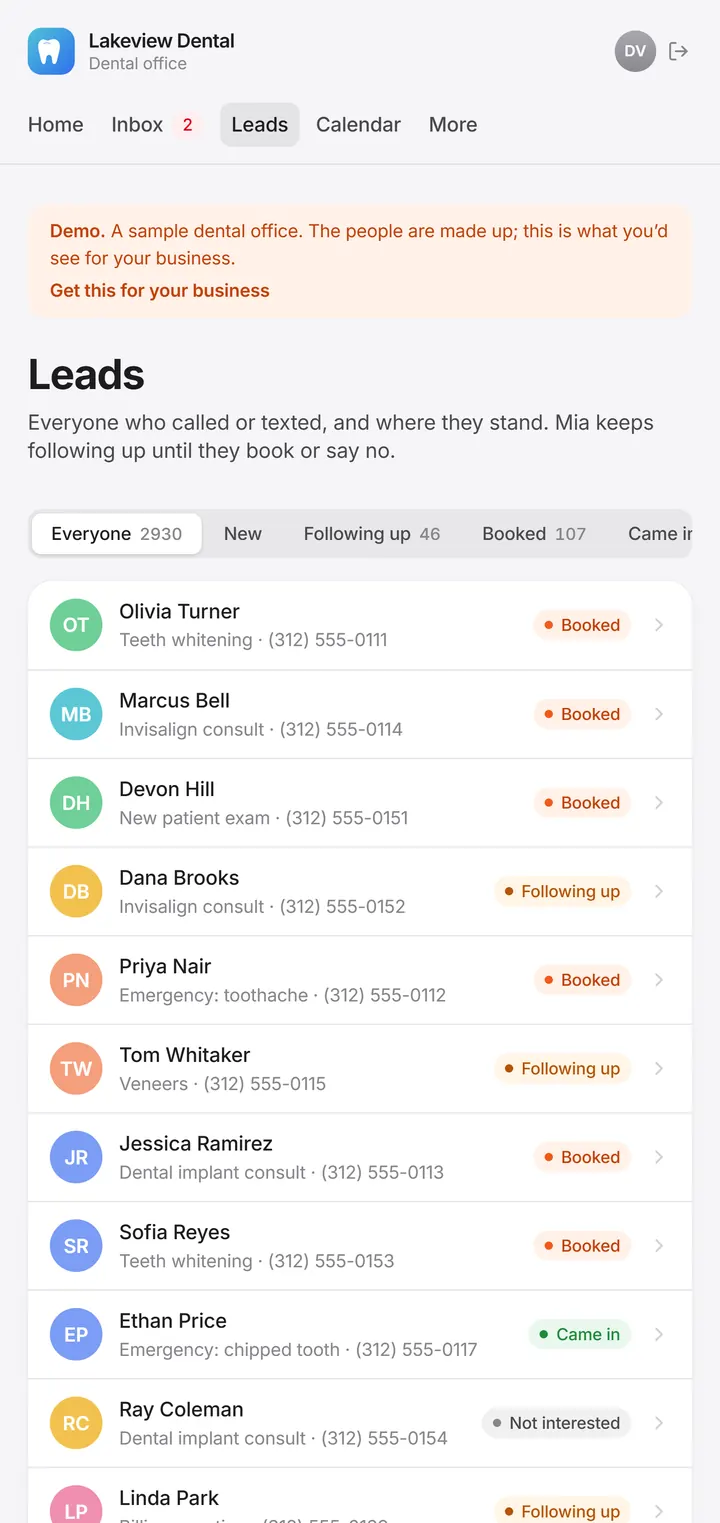
Margin runs the ads and also answers the phone. Ads go in an account your practice owns, with your budget paid straight to the platform. Mia, our AI receptionist, then answers the calls, books consultations onto the portal calendar and follows up by text with those who did not book.
We work to the cost of each booked consultation. An in-house marketer and Margin can work together, with your person on content and us on ads and answering. If an agency already runs your ads, we can do only the answering side. Unless your agreement says otherwise, either side can end it with 30 days' notice.
What Margin sets up for this.
- Ads on Facebook and Instagram, in an account you own
- Mia, the AI receptionist, on every call
- Follow-up until they book or say no
- A monthly report and strategy call
What a business needs is decided on its audit. It is a one-time setup fee and a monthly fee, with exact numbers on the audit.
How Margin works for cosmetic and elective medical practicesSee the portal with a sample businessThe Surgery Accelerator, for plastic surgeons
Related questions
Can a cosmetic practice do its own Google and Facebook ads?
Yes, and some do it well. A cosmetic practice doing its own ads needs someone with time each week to watch them, and should learn each platform's rules for health and appearance advertising before spending.
How much should a cosmetic practice spend on marketing?
There is no figure that fits every practice. A cosmetic practice should work back from what a procedure is worth and how many consultations it can handle, then set an ad budget it can sustain for several months.
What should a cosmetic practice own if it uses a marketing agency?
The ad accounts, the website, the domain name, the Google Business Profile and the list of leads. A cosmetic practice that owns these can change agency without starting again from nothing.