Why does my dental website get visitors but no calls?
By the Margin Media team · Updated
A dental website gets visitors but no calls when the next step is hard to take on a phone: the number isn't tappable, the page is slow, or it reads like a brochure with no clear way to book. Visitors are often comparing two or three practices, and they contact the one that makes it easiest.
What is a visitor trying to do?
A visitor is trying to answer a few questions fast: do you do what I need, are you near me, are you open when I can come, and how do I book. A tooth hurts or a cleaning is overdue, and they are on a phone. Every screen that doesn't answer one of those questions is a chance to leave.
What should you check first?
Check the route from landing to calling. Open your own site on your phone, not the office computer, and go through it as a stranger would.
- The phone number is at the top of every page and dials when tapped.
- The first screen says what you do and where, in plain words.
- Hours are easy to find, including whether you close for lunch.
- Each main service has its own page, not one long list.
- The contact form is short, and someone replies the same day.
- The site loads quickly on mobile data, without a pop-up in the way.
Do you need a new website or a few fixes?
A few fixes are enough when the site is sound and only the route to a call is buried. A rebuild makes sense when the site is slow, hard to edit, or built around the practice rather than the patient. Either way, a better site only produces more calls. If those calls ring out at lunch, the website was never the real leak.
How does Margin build websites for dental offices?
Margin builds or rebuilds a website with one aim: turning a visitor into a call or a booking. Each service gets a clear page, the number is always one tap away, and the same facts feed your Google profile and your AI search visibility.
Then Mia, an AI receptionist, answers the calls the site produces when your front desk can't, and books the appointment. Bookings land on the portal calendar and your office is told. Which pieces you need is decided on a free audit, and it may be that your current site is fine.
What Margin sets up for this.
- A website built to turn a visitor into a call
- Google profile and local ranking
- AI search visibility
- Mia, the AI receptionist, on every call
What a business needs is decided on its audit. It is a one-time setup fee and a monthly fee, with exact numbers on the audit.
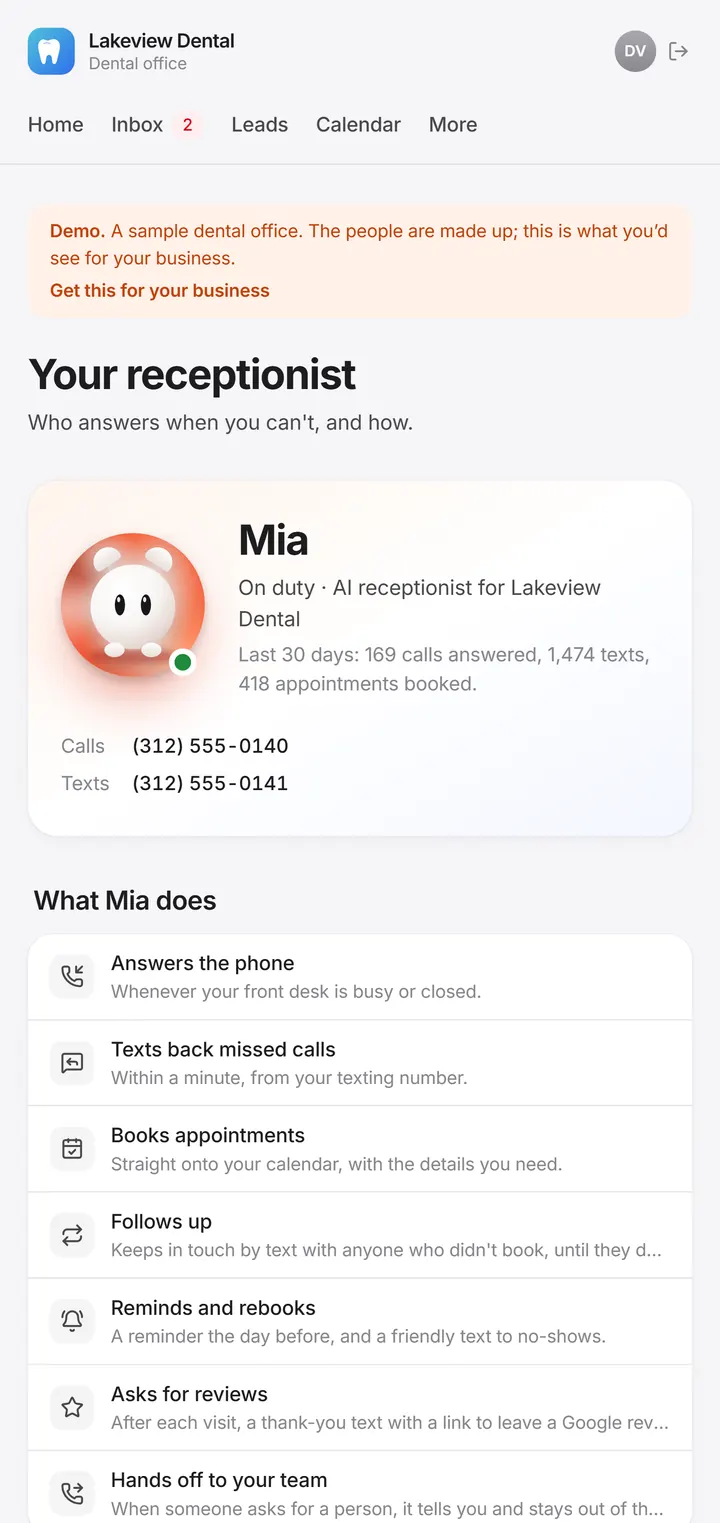
How Margin works for dental officesSee the portal with a sample businessThe Implant Accelerator, for implant practices
Related questions
How do I know if my dental website is the problem?
Compare visitors with calls and form enquiries for a month. If plenty of people visit a dental website and few make contact, the site is losing them. If they make contact and don't book, the problem is the phone or the follow-up, not the site.
Should a dental website have online booking?
It helps when it is quick and someone confirms the request promptly. For a dental website, a booking request that waits until Monday is little better than voicemail. Keep the phone number beside it, because some patients still prefer to call.
What should the first screen of a dental website say?
It should say what the dental practice does, where it is and how to book, with a tappable phone number. A new patient decides in seconds whether they are in the right place. Photos of the team help. A long welcome message does not.