How do I answer the phone while I'm on a job as an electrician?
By the Margin Media team · Updated
A solo electrician answers the phone on a job by not answering it personally: calls are forwarded to something that picks up every time, takes the details and books a visit, and the electrician returns only the calls that need a person at set times of day. The choice is a partner or office hire, an answering service or an AI receptionist.
Why can't a solo electrician just call people back?
Calling back works only if the customer waits, and a customer with a dead circuit often does not. By the time you are off the ladder and have washed your hands, they may have booked someone else. Call backs also pile up, and returning eight calls at six in the evening is a second job.
What is a setup that works?
The setup takes an evening to think through and saves the interruptions for good. Work down these steps before you choose who or what will answer.
- Decide which calls you want forwarded: every call, or only the ones you do not pick up.
- Choose what answers them: a person, an answering service or an AI receptionist.
- Write down the answers to the ten questions callers ask you every week.
- Set the hours and areas you take jobs in, so visits are booked only where you can go.
- Set a rule for emergencies, including who is reached and how, at night and on weekends.
- Pick two fixed times a day to return the calls that need you, and keep to them.
Which option suits a one-person shop?
For a one-person shop the honest test is hours and cost against calls missed. A family member answering is personal but tied to their day. An answering service takes a message, which still leaves you the call back. An AI receptionist can answer and book at any hour, but someone must set it up well and check it. Count your missed calls for a week first.
How does Margin set this up for a solo electrician?
For a solo electrician, Margin sets Mia to pick up every call or only the ones you miss. She answers questions, takes messages, and books service calls and estimates onto your portal calendar. You are told about each booking, and each call has a transcript you can read between jobs.
She does not guess: what she cannot answer comes to you as a short list of people to call back, with the whole conversation attached. Calls can go live within days of kickoff.
What Margin sets up for this.
- Mia, the AI receptionist, on every call
- Booking onto your calendar
- Your portal: every call, text and booking
What a business needs is decided on its audit. It is a one-time setup fee and a monthly fee, with exact numbers on the audit.
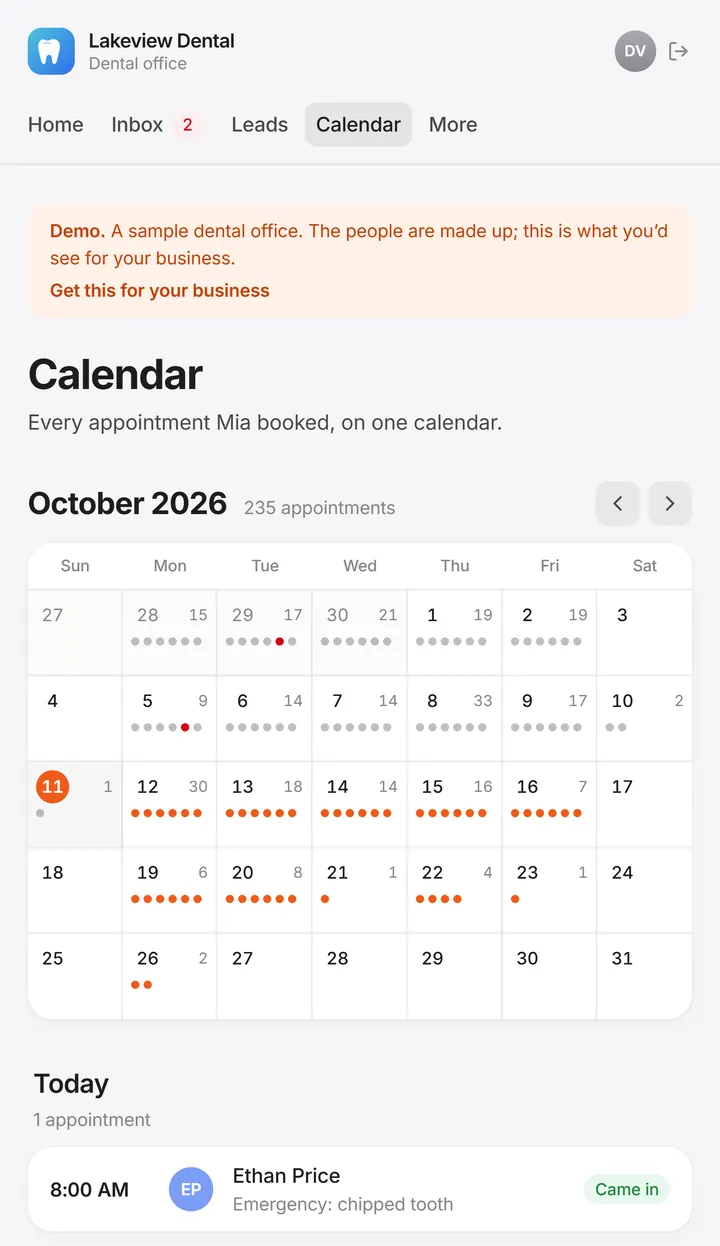
How Margin works for electriciansSee the portal with a sample business
Related questions
Can an electrician forward calls only when they don't answer?
Yes. Phone carriers let a number forward when it is busy or not answered. An electrician can pick up when free and let the rest roll to whoever or whatever is covering the phone.
Is voicemail enough for a one-man electrician?
It catches existing customers who will wait. It loses new callers with an urgent fault, who often try another electrician instead of leaving a message. For a one-man shop, voicemail is a net with large holes.
Do I have to change my number to have my electrical calls answered?
No. An electrician keeps the number on the truck and the cards. That number forwards to the line that answers, either always or only when nobody picks up.