How should an electrician handle after-hours emergency calls?
By the Margin Media team · Updated
An electrician should handle after-hours emergency calls by having every call answered live, sorting true emergencies from jobs that can wait until morning, and passing the urgent ones to a named on-call person by an agreed route. Everything else is booked for the next working day, so the customer has a time and nobody is woken for a quote.
What counts as an emergency for an electrical company?
That is your decision, and it should be written down before the phone rings at midnight. Each company draws the line differently depending on its crew and its customers. A burning smell, a sparking panel or a home with no power are examples owners often put on the urgent side. A new outlet or a charger quote can wait. Whoever answers needs the list in front of them.
What are the steps to set it up?
The steps are the same whether a person or a system answers your phone at night. The work is in deciding the rules once, clearly, in daylight.
- Write a short list of what your company treats as an emergency and what waits until morning.
- Name who is on call each night and weekend, with a backup if they do not respond.
- Decide how the on-call person is reached: a call, a text, or both.
- Give whoever answers the questions to ask: the address, what is happening, and whether the power is out.
- Book every caller who can wait into a real time slot for the next working day.
- Review the after-hours calls each week and adjust the list where it sorted wrongly.
What are the options for answering at night?
The options are the on-call electrician's own mobile, an answering service, or an AI receptionist. A mobile is direct but means one person is never off. An answering service puts a human on the line and relays messages, which some owners prefer for distressed callers. An AI receptionist answers every call at once and can book the routine ones. Any of them fails without a clear on-call list.
How does Margin handle after-hours calls for an electrician?
With Margin, Mia answers an electrical company's calls at night and on weekends the same way she does on a weekday. Anything urgent is passed straight to your team. On your audit, before anything is built, Margin goes through who is on call and how an emergency should reach them.
Routine callers are booked onto your portal calendar and the office is told. Every after-hours call sits in the portal with its whole conversation, so you can see in the morning exactly what was said.
What Margin sets up for this.
- Mia, the AI receptionist, on every call
- Booking onto your calendar
- Your portal: every call, text and booking
What a business needs is decided on its audit. It is a one-time setup fee and a monthly fee, with exact numbers on the audit.
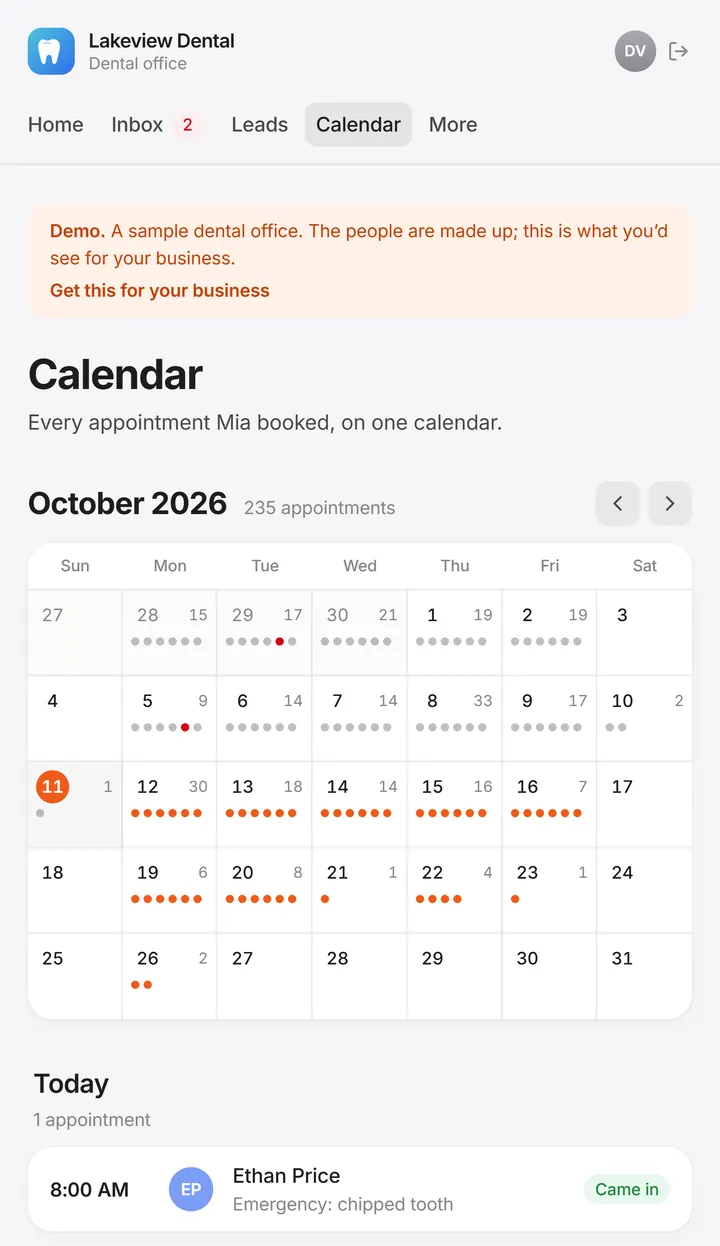
How Margin works for electriciansSee the portal with a sample business
Related questions
Should an electrician offer after-hours emergency service?
Only if someone can really go. An electrician who advertises emergency service and does not answer loses trust quickly. It is better to answer every night call, send the true emergencies to an on-call person, and book the rest.
What should an electrician's voicemail say after hours?
If voicemail is all you have, it should say when calls are returned and what to do in an emergency. Be aware that a caller with an urgent electrical problem will often hang up and try another electrician.
Can an AI receptionist tell an electrical emergency from a routine call?
It follows the rules the electrical company sets. The owner decides what counts as urgent and who is reached. That should be agreed in detail before it goes live, and checked against real calls afterwards.