Pay-per-lead sites vs running your own ads for electricians
By the Margin Media team · Updated
For electricians, pay-per-lead sites are faster to start and need no setup, but the lead is often sold to several contractors and you own nothing when you stop. Running your own ads takes more work and time to learn what pays, but the calls come only to you and the account history stays yours.
How do the two actually differ?
With a pay-per-lead site you buy a name and number after the customer has filled in someone else's form. With your own ads the customer sees your company, clicks your ad and calls your phone. The first is renting a place in a queue. The second is building your own front door, which costs effort before it pays.
How do they compare for an electrical contractor?
The table sets out the trade-offs plainly. Which matters most depends on whether you need work this week or a steadier supply over the coming year.
| Pay-per-lead sites | Your own ads | |
|---|---|---|
| Who gets the lead | Often several electricians at once | Only you |
| Setup | A profile and a payment method | An ad account, campaigns and a page to land on |
| Speed to first call | Fast | Slower while the campaigns are tuned |
| Choice of work | Limited to the site's categories | You choose the jobs and the areas |
| What you keep if you stop | Nothing | The account, its history and your pages |
| What it demands of you | Being first to call back | Someone to manage it, and answering every call |
When is buying leads the better choice?
Buying leads is the better choice when you have just started, have no reviews and no website worth sending anyone to, or when you need to fill a gap in the next few days. It is also a fair test of whether your team answers fast enough to win a race. If you lose shared leads to slow call backs, your own ads will leak the same way.
How does Margin run ads for an electrical company?
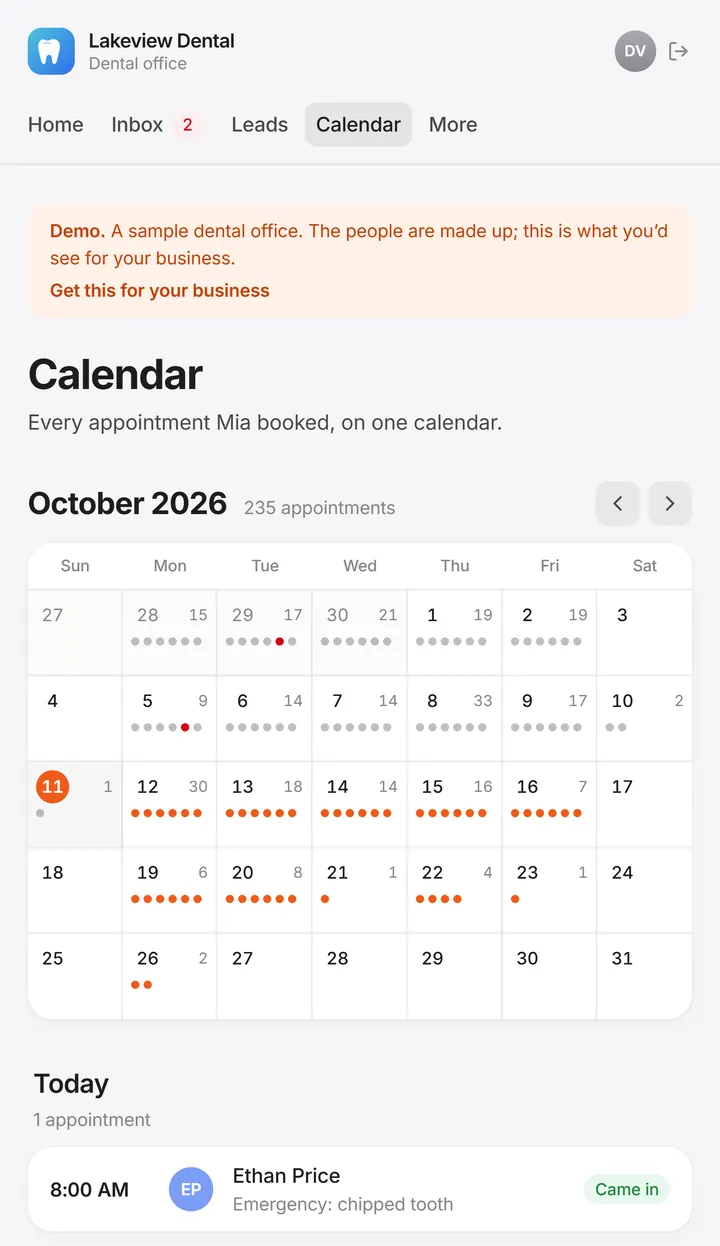
Margin builds and runs the ads on Facebook and Instagram, in an account your electrical company owns. The budget is your money and goes straight to the platform. Each campaign has its own booking page, and Mia answers the calls it produces, books the visit onto the portal calendar and tells your office.
Ads go live within 30 days of kickoff. The monthly report counts booked jobs, not clicks. If you only want the answering side, that can be set up alone.
What Margin sets up for this.
- Ads on Facebook and Instagram, in an account you own
- Mia, the AI receptionist, on every call
- Booking onto your calendar
- A monthly report and strategy call
What a business needs is decided on its audit. It is a one-time setup fee and a monthly fee, with exact numbers on the audit.
How Margin works for electriciansSee the portal with a sample business
Related questions
Can an electrician use pay-per-lead sites and their own ads together?
Yes. It makes sense to use bought leads to fill gaps while your own ads and Google profile build. An electrician should track booked jobs from each separately, so the weaker one can be cut with confidence.
Why do I lose pay-per-lead jobs to other electricians?
Because the same homeowner hears from several electricians, and the first one to have a real conversation tends to set the visit. If your call back comes hours later, the customer has often already booked someone.
Who should own the ad account for an electrical company?
The electrical company should. When the account is in your name and the budget is paid from your own card, you keep the campaigns, the history and the results if you ever change who manages them.