AI receptionist vs hiring another patient coordinator for a LASIK practice
By the Margin Media team · Updated
For a LASIK practice, hiring another patient coordinator adds a person who can counsel patients and close consultations, while an AI receptionist adds cover for every hour and every simultaneous call. They solve different problems. If consultations are overbooked, hire. If calls are being missed at lunch, at night and on busy lines, the AI covers that.
What does each one actually add?
A coordinator adds skill. She can read a nervous patient, explain the day of the procedure and talk through financing with your policies in hand. An AI receptionist adds availability. It answers at once at any hour, books the consultation and follows up, and does not take a break, a holiday or another job.
| Another coordinator | AI receptionist | |
|---|---|---|
| Hours covered | Her shift, less breaks and leave | Day, night and weekends |
| Calls at the same time | One | Every call that comes in |
| Detailed patient counselling | Yes, this is her strength | No, hands off to your team |
| Time to get started | Recruiting, then training | Set-up, then live |
| Ongoing cost | A wage and what goes with it | A monthly fee |
| If she leaves | You recruit again | Does not apply |
When should a LASIK practice hire?
A LASIK practice should hire when the work that only a person can do is backing up: consultations waiting too long for a slot, patients leaving without a coordinator sitting down with them, follow-up calls after the consultation not being made. Software will not fix a shortage of skilled human time.
When does an AI receptionist make more sense?
It makes more sense when the missed work is the first answer. If the call log shows unanswered calls at lunch, after five and during busy clinics, a second coordinator on the same shift covers part of that and none of the evenings. The two also work together: the AI takes first contact and the coordinators take the conversations that need them.
How does Margin fit alongside a LASIK practice's coordinators?
Mia, Margin's AI receptionist, can answer only the calls your coordinators miss. She answers questions, books the consultation onto the portal calendar and tells the office. When a caller asks for a person, she tells the team and steps aside. Your coordinators see each call's transcript in the portal.
She is not a counsellor and does not give medical advice. Missed-call texts and follow-up start once carriers approve your number. Cost is a one-time setup fee and a monthly fee, with exact numbers on the audit.
What Margin sets up for this.
- Mia, the AI receptionist, on every call
- Booking onto your calendar
- Your portal: every call, text and booking
- Follow-up until they book or say no
What a business needs is decided on its audit. It is a one-time setup fee and a monthly fee, with exact numbers on the audit.
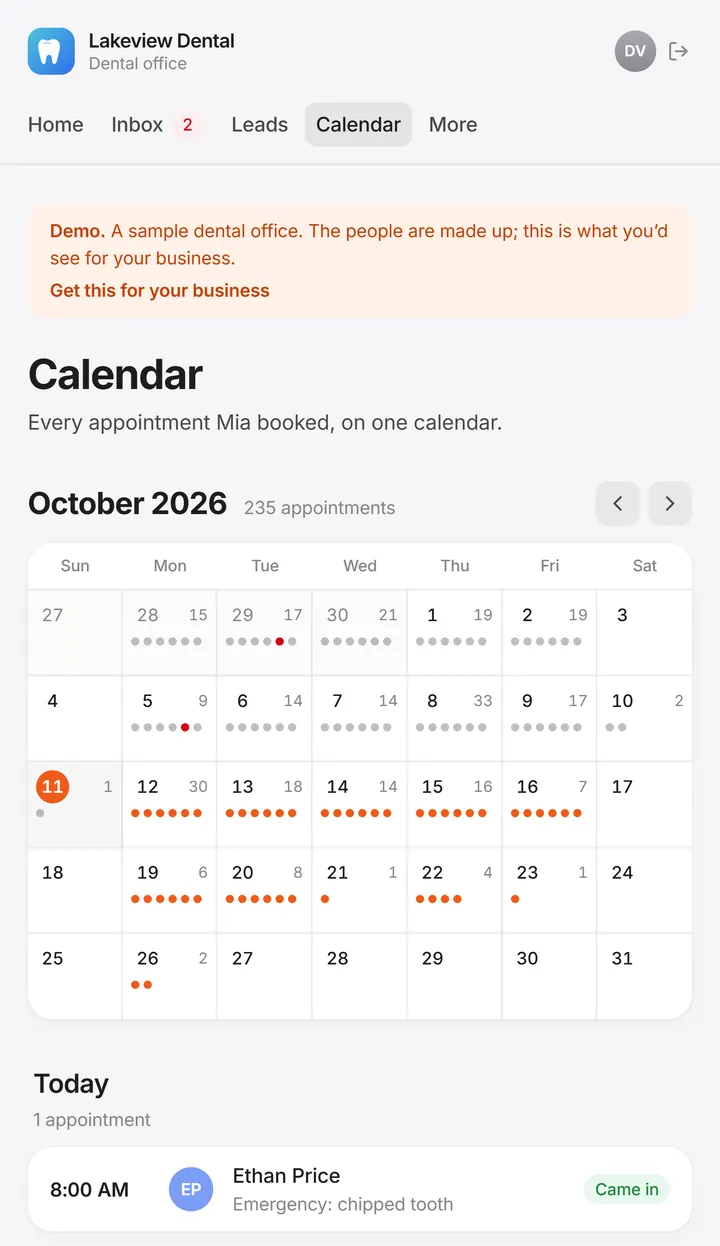
How Margin works for cosmetic and elective medical practicesSee the portal with a sample businessThe Surgery Accelerator, for plastic surgeons
Related questions
Will an AI receptionist make my LASIK coordinators feel replaced?
It should not, if it is set up to take the calls they cannot reach. Coordinators at a LASIK practice are hired to counsel patients, and an AI answering the overflow gives them fewer interruptions and a list of people to call back.
Can an AI receptionist explain LASIK to a caller?
It can answer the general questions a LASIK practice approves, such as how a consultation works and where the practice is. Whether someone is suitable and anything clinical belongs to the consultation and your clinical team.
Is an AI receptionist less expensive than a LASIK patient coordinator?
They are not the same purchase, so compare them by the problem. A LASIK practice should cost its missed calls from its own numbers, then compare that with a wage for the hours a hire would cover and the fee for an AI.