What numbers should a cosmetic surgery practice track every month?
By the Margin Media team · Updated
A cosmetic surgery practice should track five numbers every month: new enquiries by source, the share of calls answered, consultations booked, consultations attended, and procedures booked from them. Together they show where patients drop out. A sixth, the cost in ads of each attended consultation, tells you whether the marketing is paying.
Why these numbers?
These numbers follow one patient from first search to procedure. Each is a step where people fall away, and the drop between two steps tells you where to work. Revenue alone cannot do that. A slow month could be fewer enquiries, more missed calls or more no-shows, and the fix for each is different.
How do you collect them?
Collect each from the place it already exists, on the same day every month. None of this needs new software. A single sheet with one row a month is enough.
- Enquiries by source: website forms, ad platform reports, and the front desk's note of how each caller heard of you.
- Calls answered: your phone provider's log of answered and missed calls by hour.
- Consultations booked and attended: your calendar or practice software.
- Procedures booked: your coordinator's records.
- Ad spend: the monthly total from each ad account.
- Reviews: the count and rating on your Google profile.
What do the gaps tell you?
A gap between enquiries and booked consultations points to answering and follow-up. A gap between booked and attended points to reminders and the wait. A gap between attended and procedures is a conversation for the surgeon and coordinator about the consultation itself. Compare each month with your own earlier months, since other practices' figures tell you little.
How does Margin report these for a cosmetic surgery practice?
The portal shows what Margin's side handles: every call with its transcript, every text thread, consultations booked on the portal calendar, who showed, who was rebooked and who booked after follow-up. Mia's daily report says what she did in plain words.
Each month there is a written report and a strategy call covering what the ads brought in, what each booked consultation cost and what changes next. Procedures and revenue stay in your own records. The free audit scores the same steps before any of this is built.
What Margin sets up for this.
- Your portal: every call, text and booking
- A monthly report and strategy call
- Ads on Facebook and Instagram, in an account you own
What a business needs is decided on its audit. It is a one-time setup fee and a monthly fee, with exact numbers on the audit.
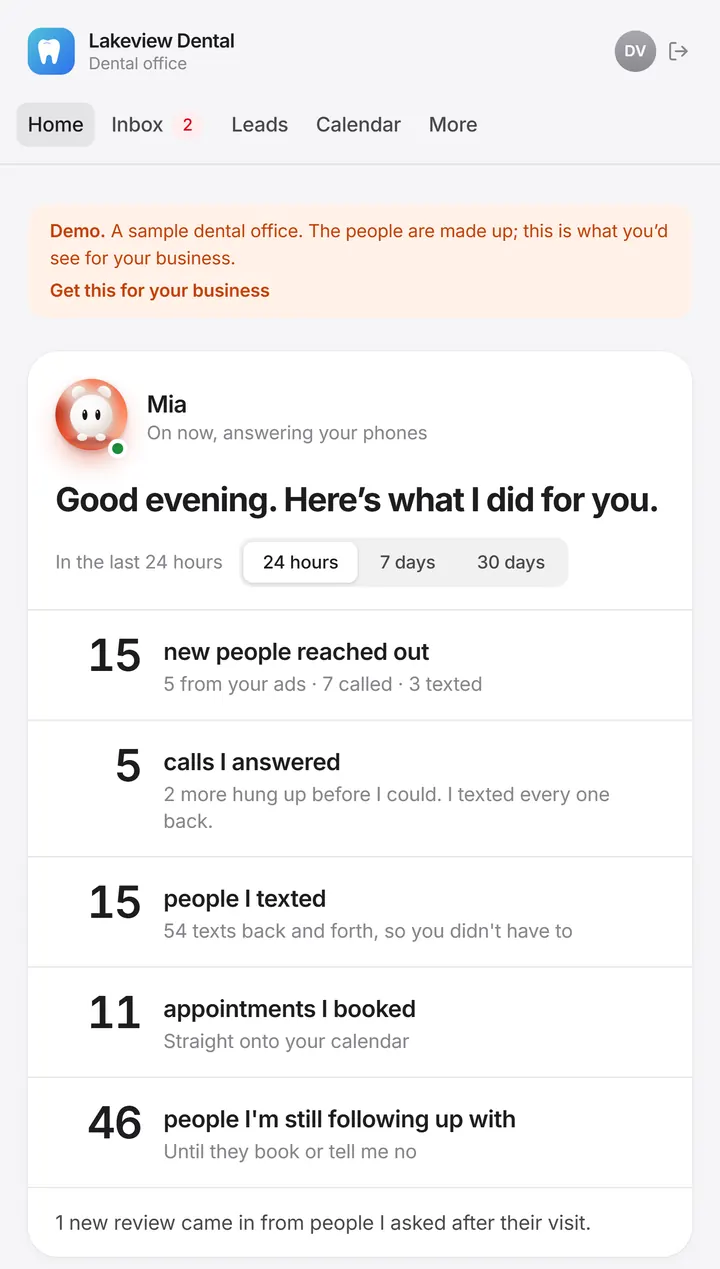
How Margin works for cosmetic and elective medical practicesSee the portal with a sample businessThe Surgery Accelerator, for plastic surgeons
Related questions
What is the most important number for a cosmetic surgery practice?
The cost of each attended consultation, set against what a procedure is worth to the practice. For a cosmetic surgery practice it ties the marketing spend to something the surgeon actually sees: a patient in the room.
How often should a cosmetic surgery practice review its marketing numbers?
Monthly is enough for decisions, with a quick weekly look at missed calls and unbooked enquiries. A cosmetic surgery practice that reviews less often than monthly tends to find problems a quarter late.
Should a cosmetic surgery practice track cost per lead?
Track it, but do not steer by it. Cost per lead tells a cosmetic surgery practice how easy an ad is to respond to, not whether those people book. Cost per attended consultation is the better guide.